Anaïs
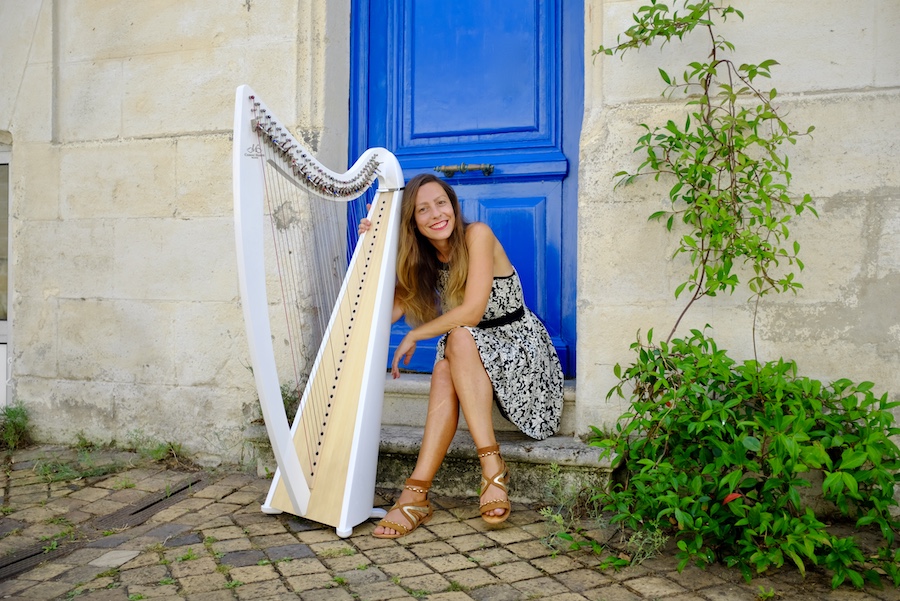
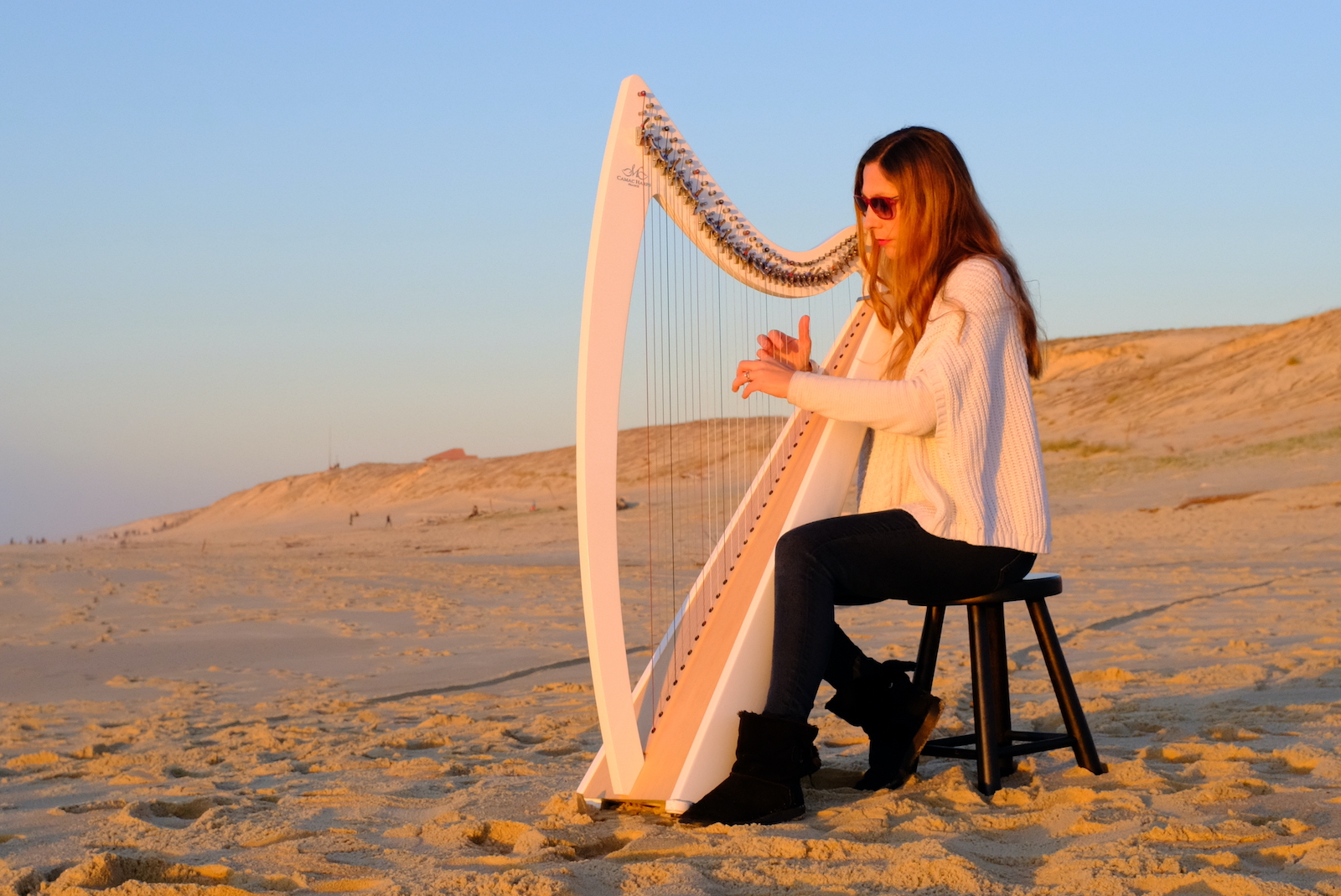
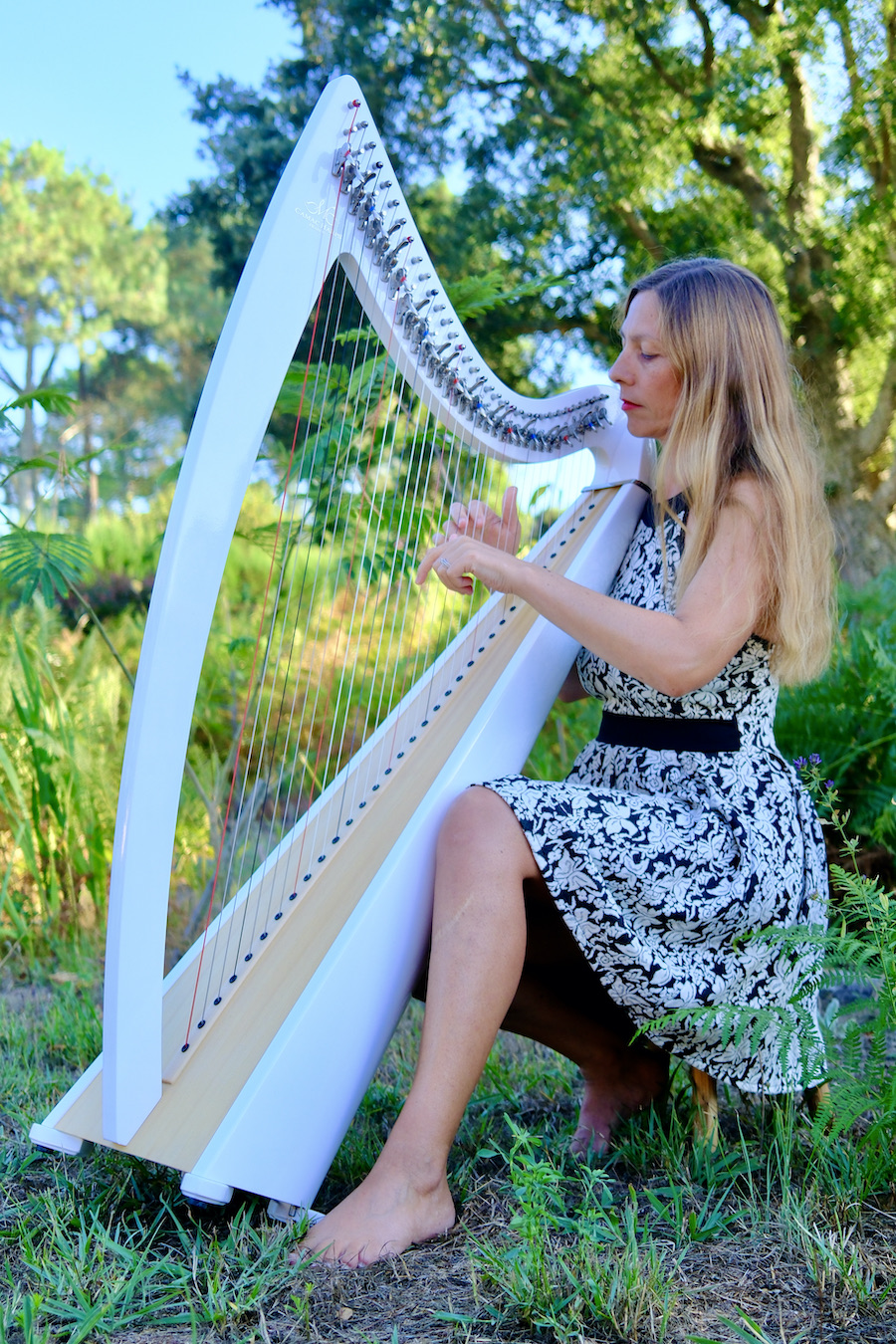
The Harpist
A little bit of music softness...
I offer musical performances to make both children and adults dream: nurseries, schools, libraries or media libraries, healthcare facilities, senior structures. Performances are also possible for private or corporate events, receptions, cocktails, weddings...
I am based in Bordeaux Bastide and can travel around Bordeaux.
My services are aimed at all audiences. I blend classical repertoire, early childhood songs, improvisation and my own compositions to bring a touch of dreaminess and lightness, through a soothing musical journey.
Early childhood:
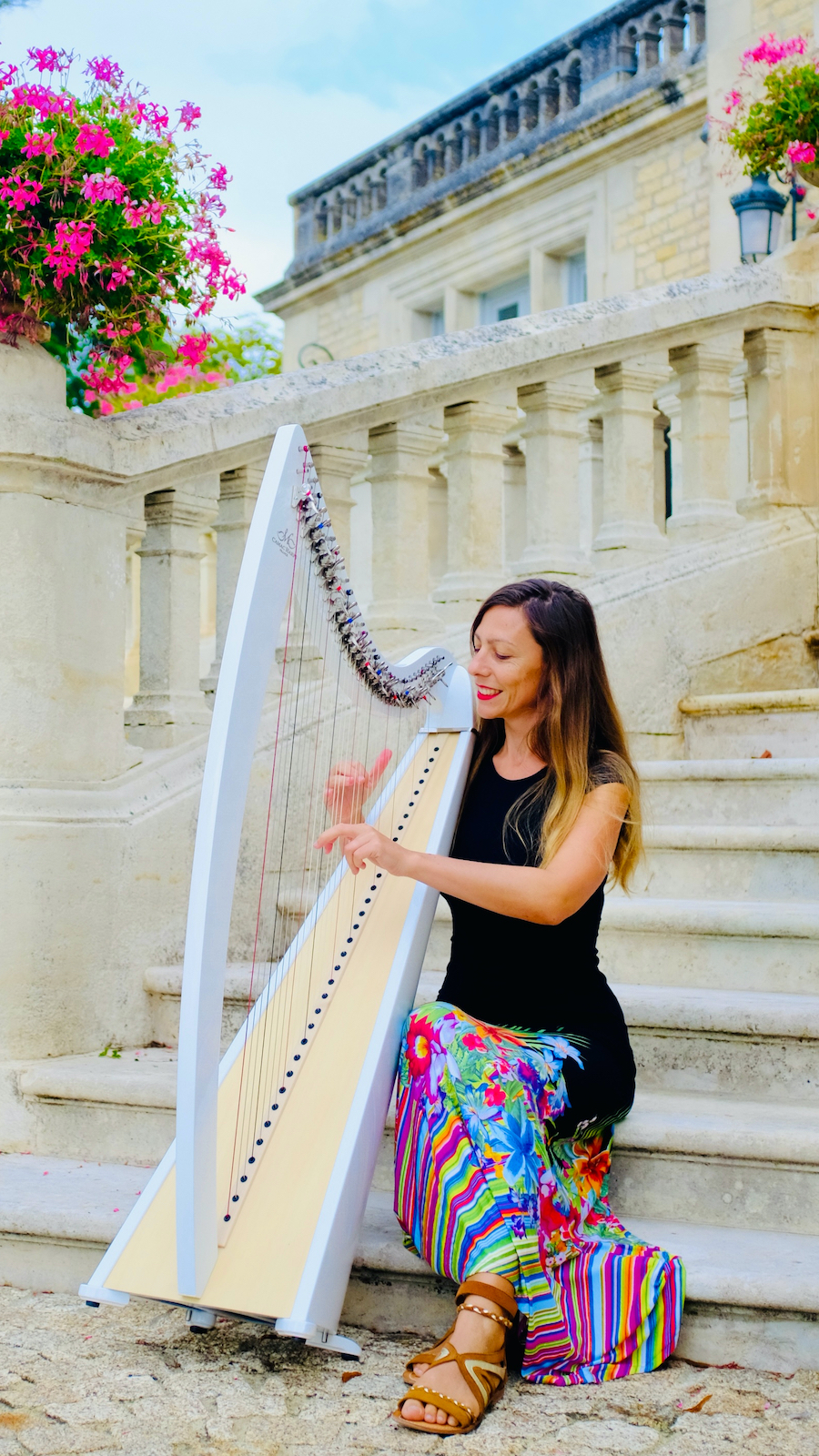
For very young children, I focus on well-known nursery rhymes that I sing while accompanying myself on the harp. I alternate with short solo harp pieces, classical or Celtic, then return to gentle or lively nursery rhymes. I vary rhythms and activities. I use all harp techniques to make the instrument resonate in different ways; I invite the children to play with me, to use the soundboard as a percussion instrument, to make glissandos, to play a melody on the strings and to help me raise and lower the harp levers. Children are active and participate by my side. I bring small maracas, bells and ribbons so the children can accompany me. We alternate between dynamic and dance-like music and pieces that encourage lying down and calming down. I do not expect children to sit still for an hour; everyone is free to move around while listening to the music.
Young audiences:
The structure is similar, but with older children I go further in the discovery and presentation of the instrument: its history, its mysteries, how it works. I encourage a real question/answer exchange and spend more time on technique. I perform classical/Celtic works, artist songs, well-known children's songs they can sing along with, as well as my own compositions. I invite the children to choose songs if they wish and to discover, touch, and make the harp resonate — its strings and its soundboard.
Seniors:
I help them discover the instrument through a simple introduction and explanation. I vary the repertoire between classical/Celtic music, my own pieces, and well-known songs that inspire dreams — *L’Hymne à l’Amour*, *La Vie en Rose*. I can visit several units and accompany those who wish to play with me. Improvisation always has its place in my playing, as it lies at the heart of harp therapy — music that does good.
"I would like to warmly thank Anaïs for coming to our classroom to introduce us to the harp. It was a particularly gentle, soothing, and enriching experience full of discoveries. The students were captivated by the beauty of the instrument and the delicacy of her playing. A big thank you for this musical sharing that sparked curiosity and wonder in both my students and myself. A truly beautiful moment of listening and calm. Well done! Thank you."
- Ms Vincent, School Sainte-Marie
"A very interesting and high-quality presentation, supported by a calm, soft, composed, and clear voice. This session is well suited for CE2-level students, both in terms of vocabulary, explanations, and a sufficiently varied and dynamic flow to keep the students’ attention. They were calm, attentive, and highly engaged. Highly recommended!"
- Ms Henin, school Sainte-Marie
"I was fortunate to welcome Ms. Oulès into my CM1 classroom in early 2024. We had prepared for her visit by learning a piece from her repertoire. Very pedagogical, Anaïs introduced us to her harp, explained how it works, and performed some classical pieces, one of her own compositions, and a piece we were learning in class that she kindly adapted brilliantly for her harp. It was a little moment out of time, a magical instant that filled our classroom. Thank you, Anaïs."
- Mr Bonneval, school Sainte-Marie
"Anaïs came to our daycare to introduce the children to the harp. Smiling and approachable, she adapted to the audience by offering various nursery rhymes as well as original compositions that were both gentle and rhythmic. Her session was greatly appreciated by both the children and adults, and we look forward to hearing her play again with her instrument."
- Ms Laluce, Daycare Les Cabanes
"Anaïs came in October to introduce the children of our leisure center to the harp. It was a wonderful moment, filled with gentleness and curiosity. Our little athletes were captivated both by the beauty of the instrument and by your clear, accessible, and well-adapted explanations. Your caring approach allowed each child to experience a soothing and enriching musical moment. A truly lovely experience for the children, which we highly recommend."
- Jeanne Renaud, Girondins Bordeaux Bastide Leisure Center
"You know I've asked for the same instrument as you !"
- Ambre, Kindergarden school Sainte-Marie
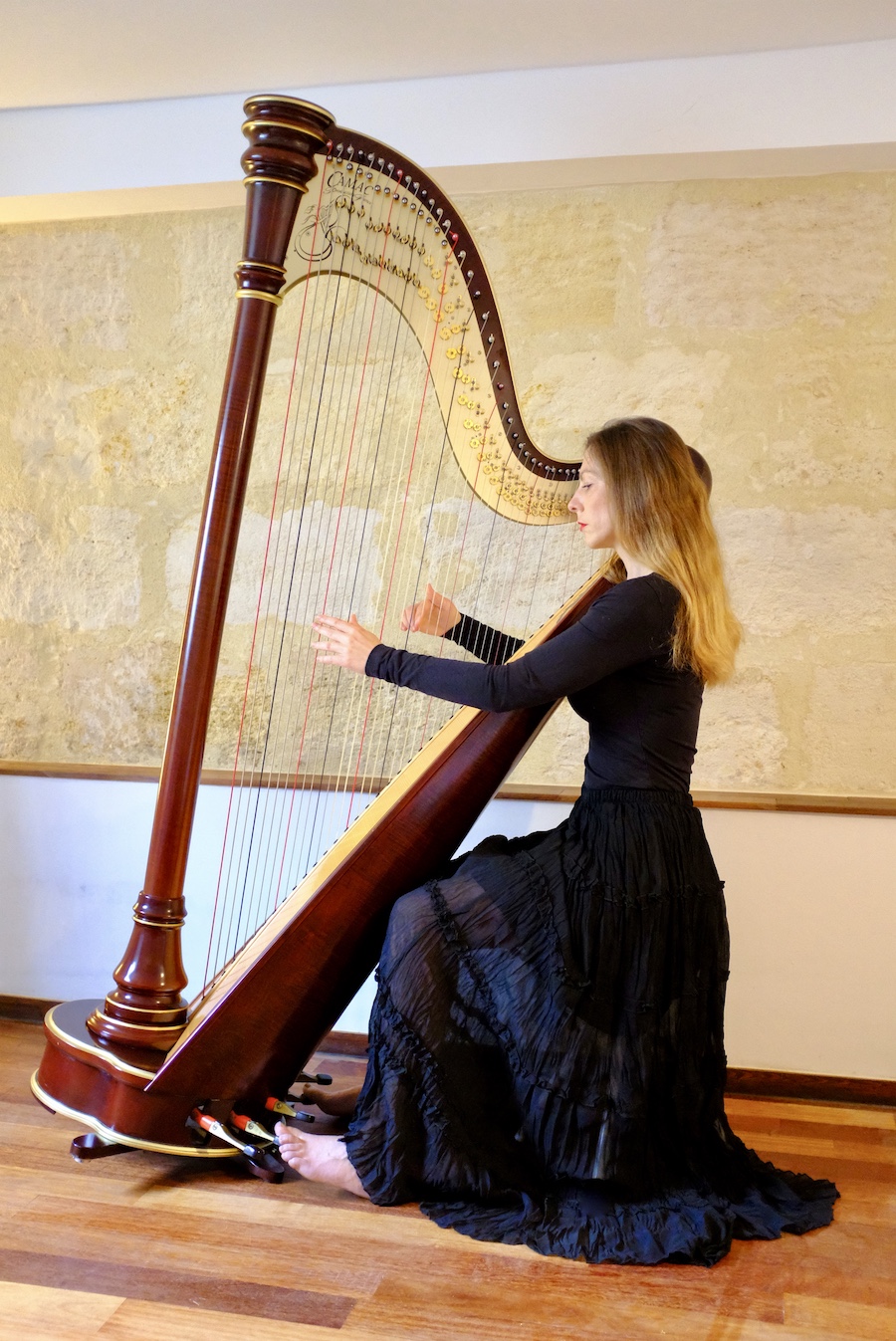
The Artist: Haindash
Anaïs La Harpiste is also Haindash, harpist, singer, and composer.
My music invites you to an inner journey...
I draw inspiration from my experiences, stories, nature, emotions, and poetry, composing timeless songs filled with gentleness. My music combines my voice and my harp in simplicity, keeping all the delicacy, sensitivity, and unique acoustic character of my instrument.
Without artifice and embracing my vulnerability, I explore myself and others through notes and words.
You can find all my compositions on many streaming platforms:
Spotify,
Apple Music,
Deezer,
Amazon Music, Bandcamp.
I am also present on Instagram
et YouTube
but you will not find any photos or videos of my performances for image rights reasons.



Here is a small selection of my songs to listen to directly on my website.
Petite Etoile, a song full of love and joy composed for my daughter
Here and Now, an album of pure improvisations representing the present moment and letting go
Hey You, a song full of light written during Covid
Little Sunshine, a jazzy happy song
About me
It all begins at the age of 7, when a little girl falls in love with a harp she sees at her town’s community fair. To her parents’ delight, she starts learning this majestic instrument… first with a rented Celtic harp, then with a full-size concert harp.
I then devote my entire childhood and teenage years to music: the harp of course, but also choir, orchestra, singing, music theory and performances. My journey begins in a small music school and later continues at the conservatory.
My musical studies focus on performance, technical skill and the study of increasingly complex works. The required work is substantial, demanding time and energy. I then begin my higher education in marketing and foreign languages, and I become unable to handle both; with great sadness, I must choose to set music aside.
My studies lead me to travel, discovering new horizons; I find a guitar wherever I go to stay connected to music. It is only in 2019 that I find my way back to my harp, inspired by a new breath: I compose songs and instrumental pieces under the artist name Haindash. Nine albums are now available on streaming platforms.
Covid marks a major artistic turning point for me; confined in my den, I compose tirelessly, song after song – *Hey You*, my most well-known track, is part of the album *Lost in Time*, written during the Covid period. Then in August 2020, I treat myself to a new Celtic harp – Ulysse – to accompany Athena, my concert harp. Thanks to Ulysse, I can perform beyond my walls and go out to meet audiences.
Today in 2025, after eighteen years in the world of web and tech – and a major burnout – I return to my first love and find my path again: the harp.
My wish? To share the joy of music in nurseries, schools, libraries, healthcare facilities, companies… and anywhere a few notes can make eyes shine.
Why Music?
Music is very ancient: the oldest objects found are musical instruments. The Neanderthal bone flute is estimated to date back around 43,000 years. Music is so old because it has played a positive role in human evolution.
Music is universal: no known culture is without music. Humans are born musical: even in utero, we can recognize rhythms, melodic contours, modulations, and musical phrases.
There isn’t a single "music area" in the brain. Music, whether active or passive, engages almost all regions of the brain: subcortical structures, auditory cortex, motor cortex, somatosensory cortex, inferior frontal cortex, visual cortex, frontal lobe, cerebellum, hippocampus and prefrontal cortex (memory), nucleus accumbens and amygdala (emotions), Broca and Wernicke areas (language).
Music has a real biological power: musical behaviors can affect non-musical functions because they share brain regions. Neuroplasticity is the brain's ability to reorganize its structure, function, and connections in response to stimuli. Through its influence on the whole brain, music can induce structural and functional brain changes throughout life. It can influence non-musical abilities such as language, memory, movement, and emotions. Its impact on health and education is well documented.
Why the Harp?
The harp fascinates with its aura, mysteries, myths, legends, and history.
It is, along with the flute, one of the oldest known instruments. It had various names: Veena in India, Lyra, Nevel, or Kinnor. The harp probably originated from the bow, from Africa at least 5,000 years ago, though cave paintings may suggest even earlier origins (Lascaux, 13,000 BCE).
Historically, the harp appears in the Middle East, India, Asia… In Egypt, Hathor, goddess of music, played it. Buddha remembered being the harpist Guttila in a past life. "The Harpist's Song" is an ancient Egyptian poem sung by (usually blind) harpists to accompany the deceased into the Other World. King David played the harp for Saul to heal his suffering.
In Greek mythology, Hermes created the lyre from a tortoise shell (the world, feminine symbol), deer wood (masculine energy), and seven goat strings (spiritual energy). Apollo gave the lyre to Orpheus, who used it to charm the guardian of the Underworld. Celtic legends also mention harpist gods, like Dagda. Among the Celts, druids and bards played the harp to teach, heal, and inspire (Merlin). In Ireland, Canola, goddess of music, is credited with inventing the harp. Harpist figures are numerous and fascinating!
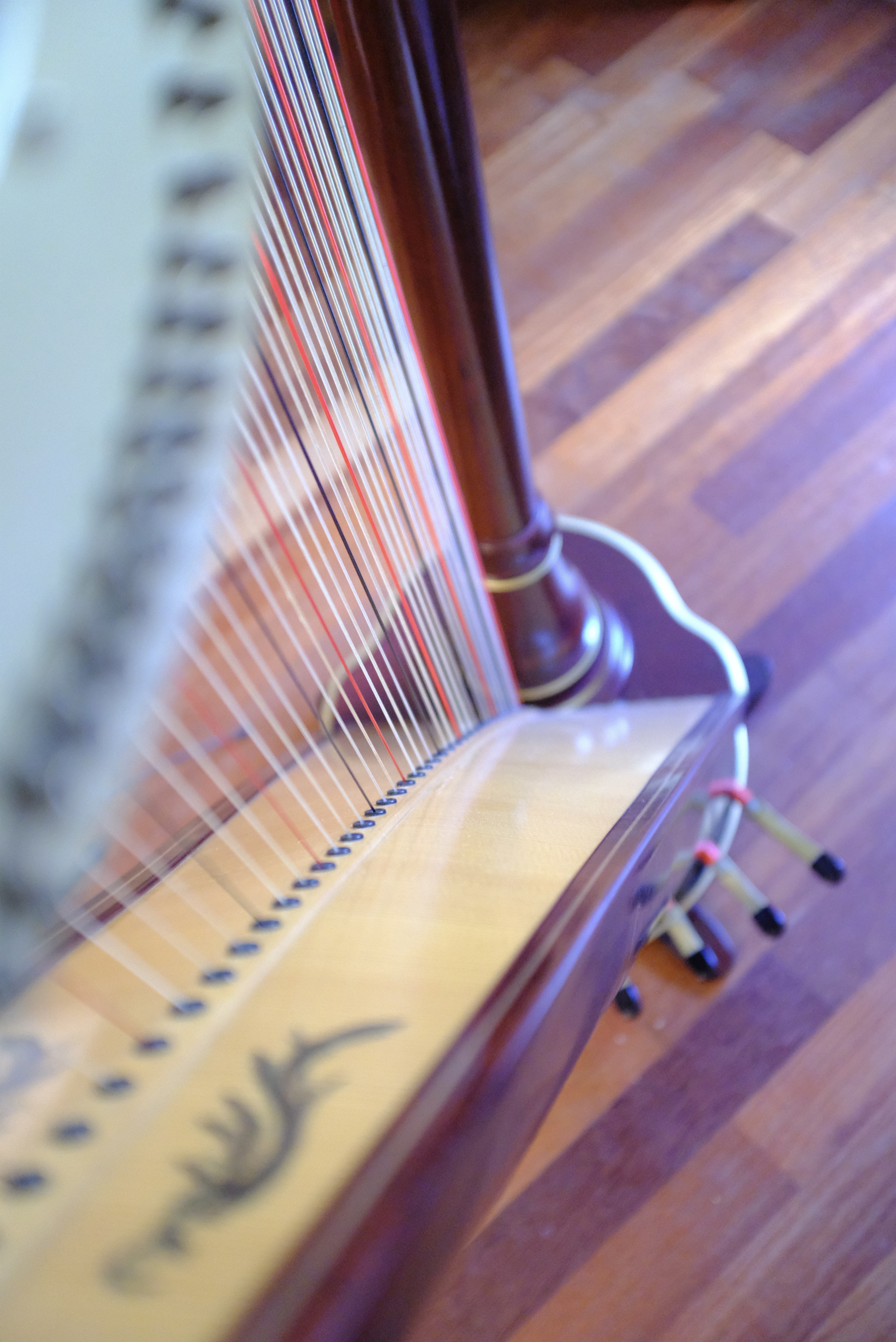
The harp is a unique instrument, covering the full human voice range and beyond. It can resonate with children’s (high), women’s (medium), or men’s (low) voices. Its strength lies in its free string, which vibrates for a long time and allows multiple natural harmonic resonances to blend, creating a unique “sound aura”.
Different playing techniques enrich the sound: plucked strings, played with fingernail, near the soundboard, harmonics with the palm, percussion on the soundboard, glissando… It is a polyphonic instrument inviting harmony. The harp creates a sound cradle where one can both reflect and escape.
Harp Therapy
What is it?
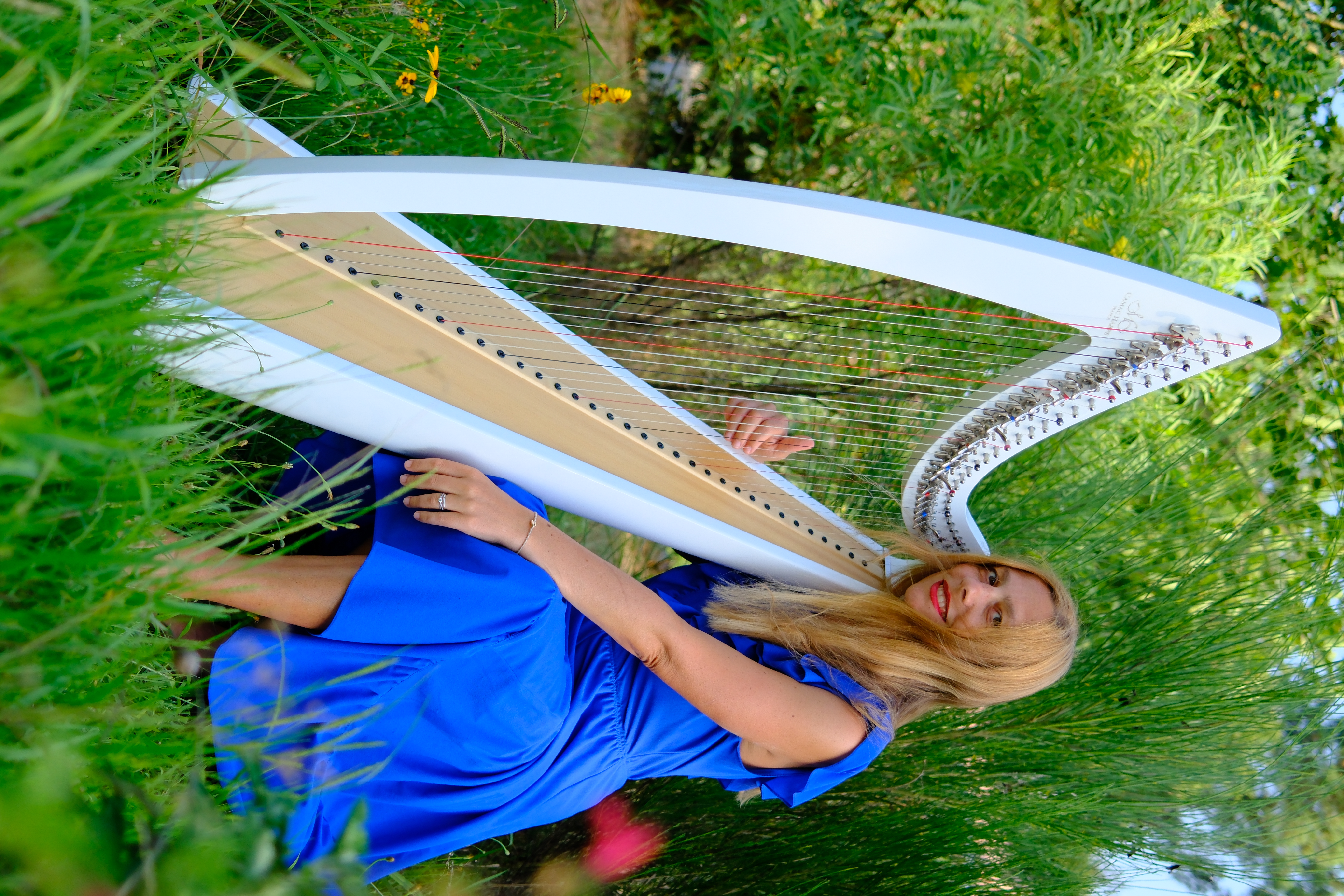
Harp therapy was born in the United States in 1990, where it is particularly developed. It is a training program recognized by the National Standard Board for Therapeutic Musicians (NSBTM) and carried in Europe by the International Harp Therapy Program (IHTP).
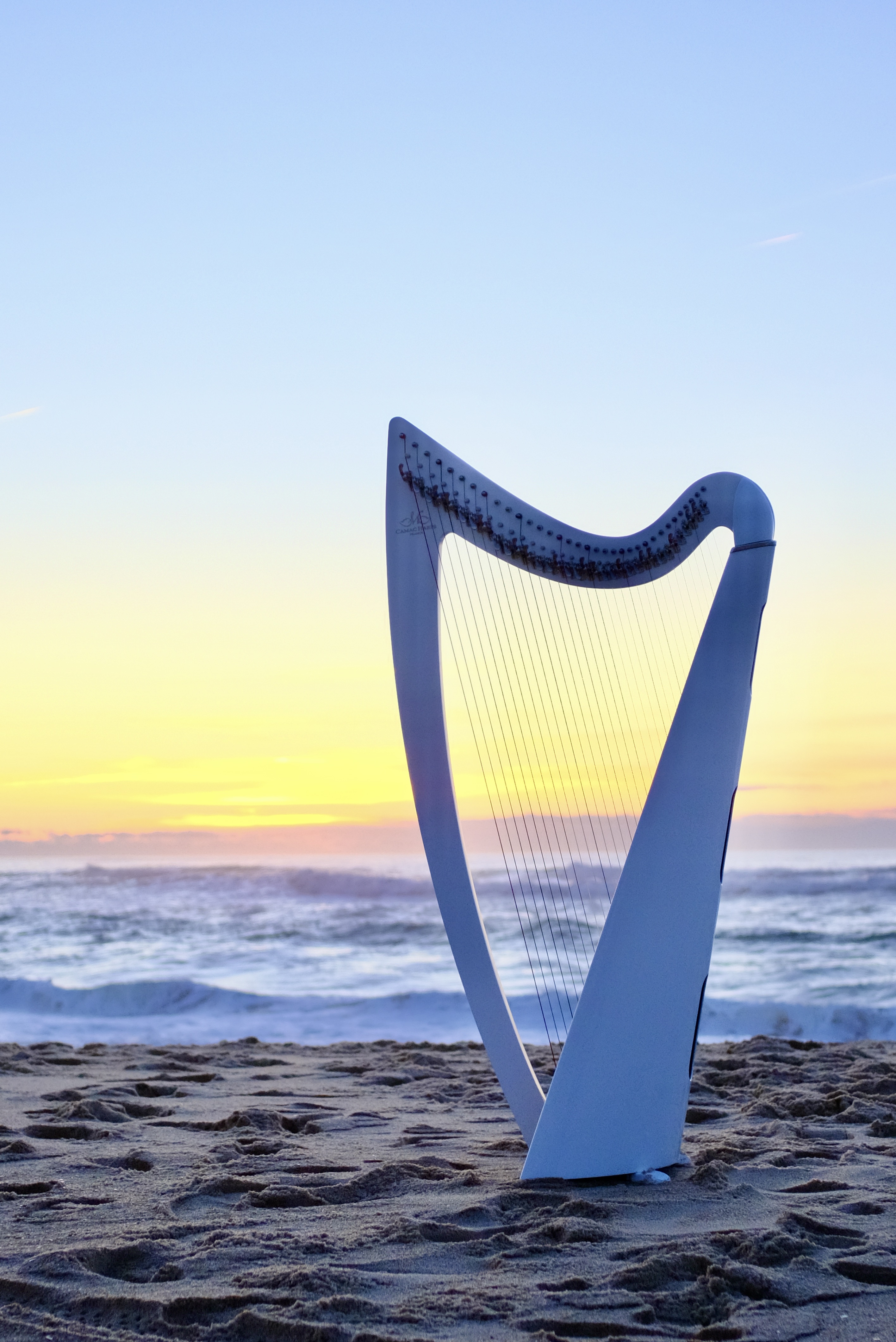
Harp therapy is an approach based on the structured and targeted use of music played on the harp for care. It aims to support the listener’s overall well-being, relying on the documented effects of sound, rhythm, and vibration on the nervous system, physiological functions, and emotional state.
It is not music therapy, but rather therapeutic music: above all, a true artistic practice.
How?
The essence lies in improvisation. The practitioner uses their technical skills and musical knowledge to improvise in a creative and adaptive way. This tailor-made improvisation is carried out with attention and kindness toward the listener.
Everything relies on careful observation of the other person’s needs in order to adapt the music in response. I am constantly searching for the listener’s tone of resonance.
It is not about impressing, entertaining, or playing “lots of notes” in virtuosity or performance: the goal is to create a sound cradle between harp, musician, and listener.
For what purpose?
Studies have shown that harp therapy can help:
- reduce pain, stress, and anxiety
- stabilize certain physiological parameters (heart rate, breathing rate, oxygenation, blood pressure)
- encourage relaxation or movement.
Harp therapy is a form of sound and musical massage.
What I am not:
I am not a doctor, psychologist, or healer: I am an artist, a craftswoman. My intention is not to act directly on the listener; it is the music that acts through my harp.
Healing is not the role of the harp therapist. I am here to let my harp’s aura shine and to play for you, in the present moment, a music that is neither perfect nor superior, but authentic.
Contact
Contact me to discuss your projects.